
Inkless Scar Tattoo Treatment Facts and Healing
Scars tell a story, but not everyone wants to keep that story visible. Inkless scar tattoo treatment is an innovative way to soften and improve the look of scars without traditional tattoo ink. This procedure offers people a chance to feel more comfortable in their skin, while staying safe, natural, and effective. Let’s explore everything you need to know about inkless scar tattoo treatment; from how it works to healing expectations.
What Is Inkless Scar Tattoo Treatment?
Inkless scar tattoo treatment is a form of scar camouflage that uses a tattoo machine without pigment. Instead of ink, a custom blend of vitamins, serums, and natural healing ingredients is applied directly into the skin. These nutrients stimulate collagen and elastin production while promoting cell turnover. The result is smoother skin, a more even tone, and a noticeable reduction in scar visibility.
Unlike traditional scar camouflage tattoos that rely on color-matching ink (which is also a great option), inkless scar tattoo treatment works with your body’s natural healing process. It doesn’t cover the scar; it helps the skin repair itself.
How Does Inkless Scar Tattoo Treatment Work?
The process begins with sending clear pictures of your scars for evaluation. This helps determine whether inkless scar tattoo treatment is right for you. Sometimes follow-up questions or a phone call may be needed for clarity.
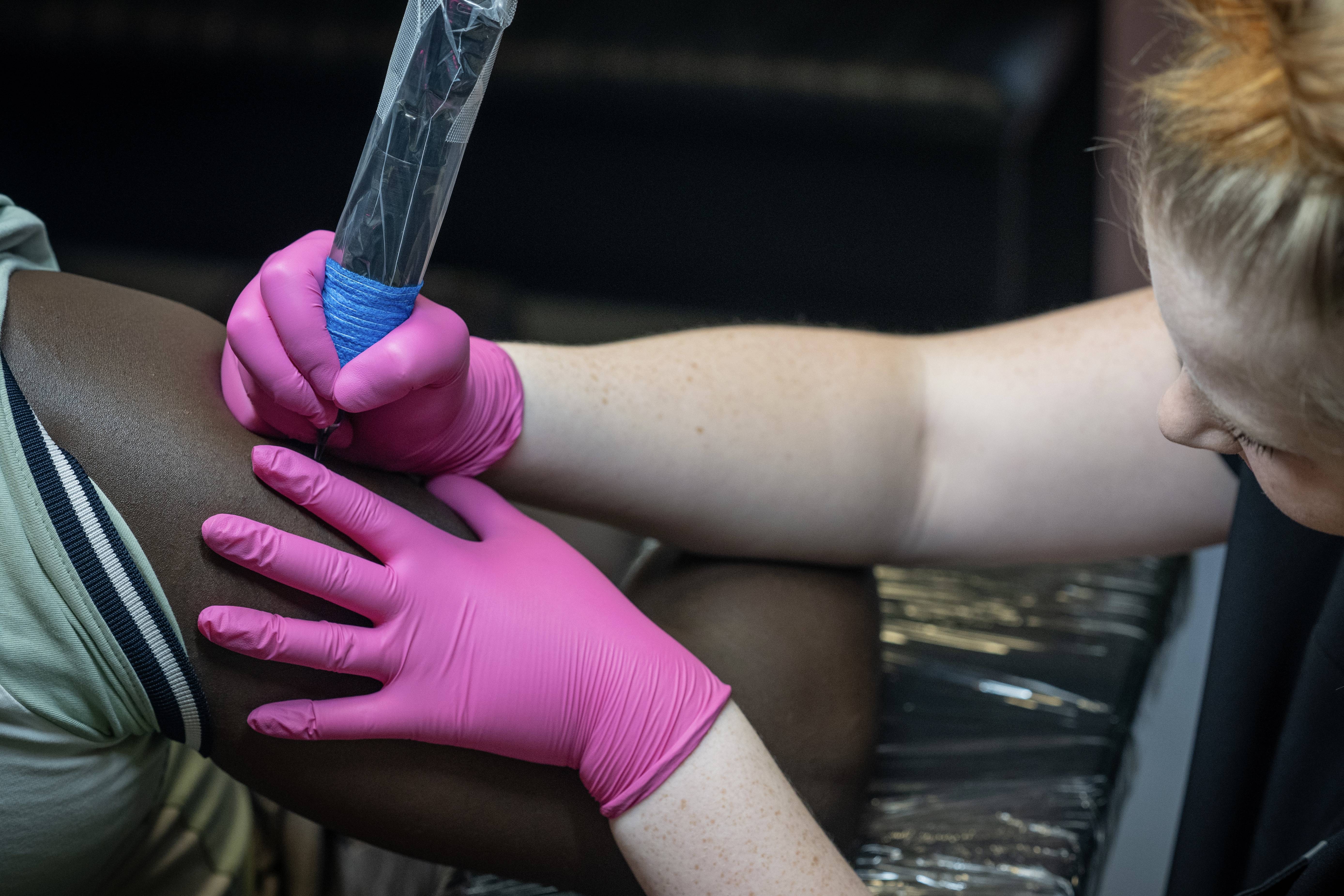
Once ready for treatment, your tattoo artist, Melissa, uses a tattoo machine with a specialized needle configuration. Instead of depositing ink, the needle creates controlled micro-injuries while delivering healing serums into the skin. This dual action (the stimulation of micro-needling combined with healing nutrients), encourages new collagen growth. Over time, the skin naturally remodels itself, making the scar appear flatter, softer, and closer in tone to the surrounding skin.
How Long Should a Scar Be Healed Before Treatment?
For the best results, scars should be fully healed before starting inkless scar tattoo treatment. In most cases, this means waiting 12–18 months after the scar forms. A scar that is still pink, raised, or tender is considered immature and not ready for treatment.
Fully healed scars: those that are flat, lighter in color, and no longer sensitive; respond much better. Treating too early can irritate fragile skin and slow recovery. Waiting ensures your skin has completed its natural healing cycle, so the treatment can work effectively.
If you’re unsure, sending clear pictures of your scar allows Melissa to evaluate whether it’s ready for inkless scar tattoo treatment. Sometimes, a quick follow-up question or call is needed to confirm timing.
Can Inkless Scar Tattoo Treatment Be Used on Keloids?
Inkless scar tattoo treatment is not recommended for keloid scars. Keloids are an overgrowth of scar tissue that continue to spread beyond the original wound. Because they are active scars, stimulating them with tattoo needles can actually make the keloid worse.
This treatment works best on flat, mature scars; like surgical scars, stretch marks, or acne scars. If you have keloids, it’s best to consult a dermatologist for options such as steroid injections, silicone sheets, or laser therapy. Once the keloid is stable and properly managed, other treatments may be discussed, but inkless scar tattooing is not a safe first choice.
What Scars Can Be Treated?
Inkless scar tattoo treatment works best for:
- Surgical scars (including mastectomies and top surgery)
- Stretch marks
- Acne scars
- Burn scars (depending on severity)
- Injury scars
Every scar is different. Age, type, and depth of the scar, as well as your overall health, can all influence results. While some scars respond quickly, others may need multiple sessions for optimal improvement.
What to Expect During Healing
Healing from inkless scar tattoo treatment is usually mild compared to other skin procedures. Here’s a general timeline:
- Day 1–3: Redness, sensitivity, and slight swelling in the treated area.
- Day 4–7: Skin begins to feel dry and tight, sometimes with light flaking.
- Week 2–4: The treated scar starts to smooth, soften, and change color.
- Month 2–3: Results continue to improve as collagen remodels and new skin develops.
Most people can return to daily activities right away, though it’s best to avoid direct sun, swimming, or harsh skincare products while healing. Pay attention to your artist’s aftercare instructions for best results.
Is Inkless Scar Tattoo Treatment Safe?
Yes, when performed by a trained professional. Because no tattoo ink is used, there’s no risk of pigment migration or mismatched coloring. The serums applied are specifically chosen for scar healing and skin rejuvenation. As with any skin procedure, some mild discomfort or redness is normal, but risks are minimal.
Benefits of Inkless Scar Tattoo Treatment
- No ink or artificial pigments used
- Natural stimulation of collagen and elastin
- Reduces the look and texture of scars
- Works on a wide range of scar types
- Short recovery time compared to surgery or laser
For many, the biggest benefit is emotional: feeling more confident and comfortable in their skin again.
FAQs About Inkless Scar Tattoo Treatment
Does inkless scar tattoo treatment hurt?
Discomfort is minimal, similar to light scratching. Numbing cream may be used.
How many sessions will I need?
Some scars improve after just 1–2 sessions, but larger or older scars may need more.
Will my scar disappear completely?
No treatment can erase a scar entirely, but inkless scar tattoo treatment significantly improves its appearance.
How long do results last?
Results are long-lasting. Once the skin remodels, the improvement is permanent, though natural aging continues.
Final Thoughts
Inkless scar tattoo treatment is changing the way we approach scar healing. By blending advanced tattooing techniques with natural serums, this procedure offers a safe, effective way to reduce the visibility of scars. Healing is straightforward, risks are low, and results can be life-changing.
If you’ve been curious about scar treatment but hesitant about ink, this might be the option that finally helps you feel at home in your skin again.
For more details, read my guide on scarring and check out my blog on dark skin and scarring.